
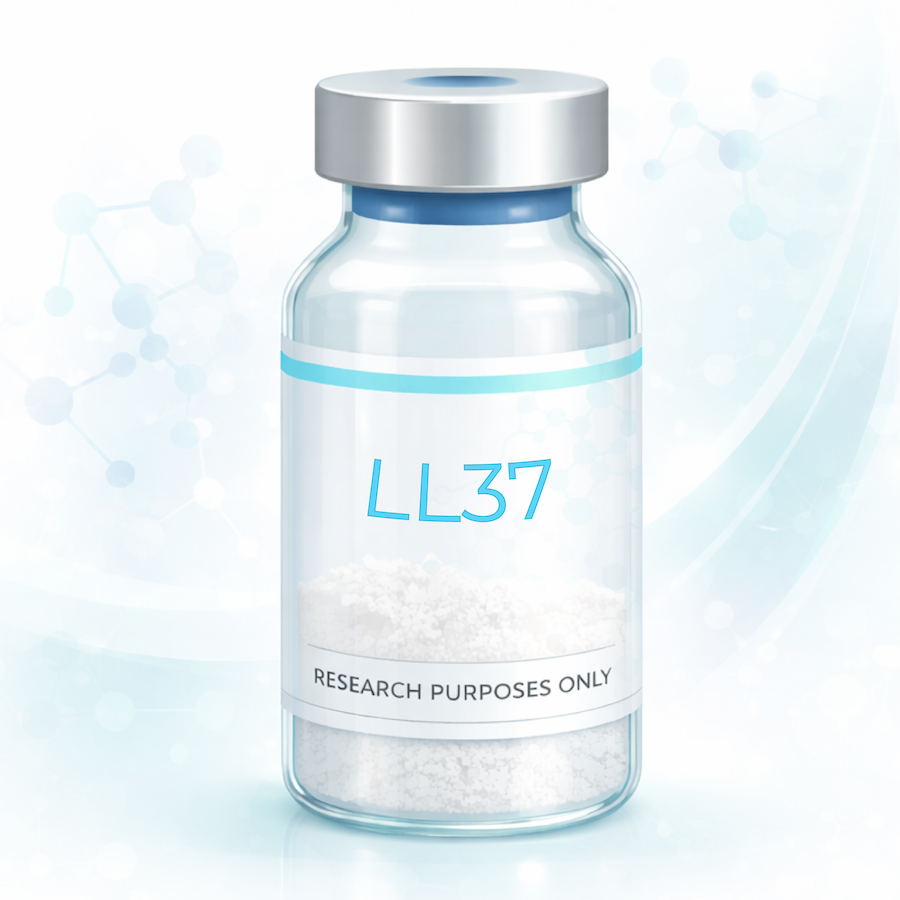
Description
LL-37 (Cathelicidin Fragment)
Chemical Classification: Amphipathic Alpha-Helical Peptide
Research Overview LL-37 is a 37-amino acid bioactive peptide derived from the C-terminal end of the human cathelicidin antimicrobial protein (hCAP18). In molecular research, LL-37 is categorized as an amphipathic alpha-helical peptide and is a primary subject in the study of innate immune signaling and cellular defense mechanisms.Unlike traditional antibiotics, research on LL-37 focuses on its complex role as a signaling molecule capable of modulating the immune response and influencing tissue remodeling.
Common Research Applications
This cathelicidin-derived peptide is frequently utilized in laboratory models to investigate the following experimental objectives:
- Antimicrobial Peptide (AMP) Dynamics: Investigations into the peptide’s ability to disrupt bacterial cell membranes through “toroidal pore” or “carpet” models in in-vitro assays.
- Innate Immune Modulation: Studies focusing on the peptide’s interaction with formyl peptide receptor-like 1 (FPRL1) and its influence on the chemotaxis of neutrophils, monocytes, and T-cells.
- Wound Healing & Angiogenesis: Research regarding the induction of Vascular Endothelial Growth Factor (VEGF) and the proliferation of epithelial cells in dermal and mucosal repair models.
- Biofilm Disruption: Exploration of the peptide’s efficacy in inhibiting the formation of bacterial biofilms and its synergistic potential when combined with conventional chemical reagents.
- Cytokine Regulation: Studies exploring the dual nature of LL-37 in both pro-inflammatory and anti-inflammatory signaling, depending on the cellular environment and receptor binding.
Laboratory Handling & Storage
- Solubility: Soluble in water or physiological saline; however, due to its amphipathic nature, it may require gentle agitation for complete dissolution.
- Stability: Highly sensitive to enzymatic degradation. Lyophilized powder should be stored at -20°C for long-term preservation. Once reconstituted, it is recommended to maintain at 2°C – 8°C.