
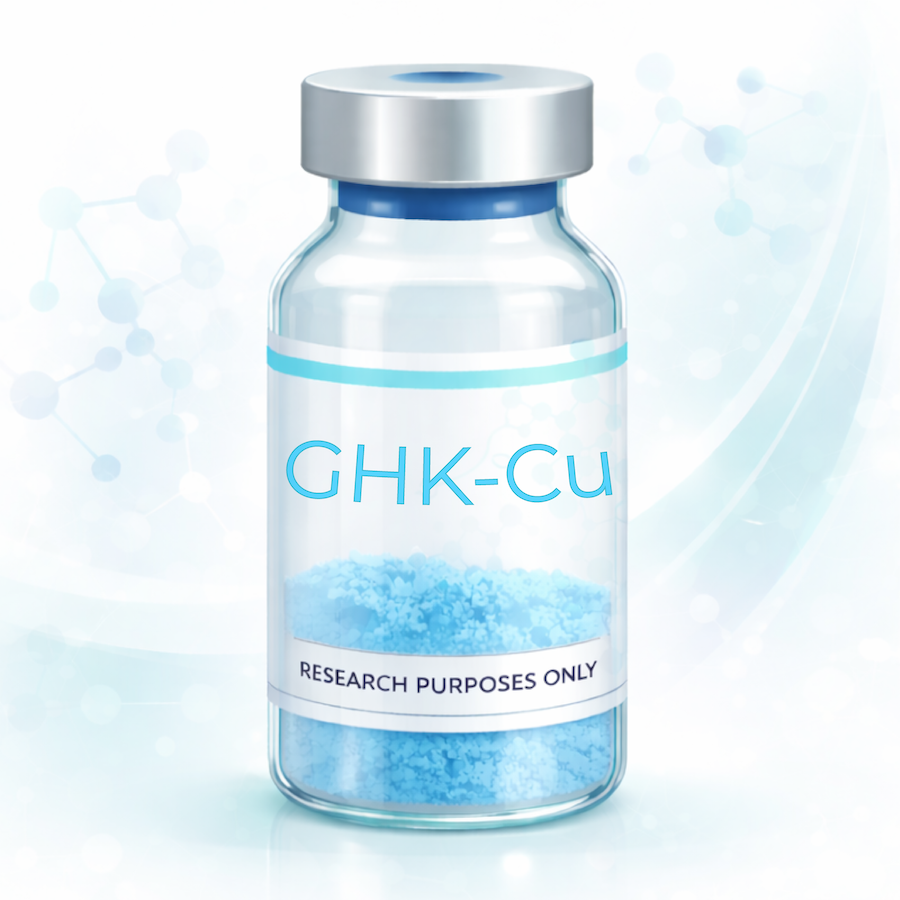
Description
GHK-Cu (Glycyl-L-Histidyl-L-Lysine Copper)
Chemical Classification: Copper-Complexed Tripeptide
Research Overview
GHK-Cu is a naturally occurring copper complex of the tripeptide glycyl-L-histidyl-L-lysine. In biochemical research, it is classified as a carrier peptide with a high affinity for copper (II) ions. It is a primary subject in molecular biology for investigating the modulation of the extracellular matrix (ECM) and the regulation of gene expression related to dermal structural integrity and systemic antioxidant response.
Common Research Applications
This copper-complexed tripeptide is frequently utilized in laboratory models to investigate the following experimental objectives:
- Extracellular Matrix (ECM) Synthesis: Research focusing on the upregulation of collagen, elastin, and glycosaminoglycans (GAGs) in dermal fibroblast cultures.
- DNA Repair & Gene Expression: Investigations into the peptide’s ability to influence the expression of genes involved in cellular defense, including the activation of antioxidant enzymes like superoxide dismutase (SOD).
- Angiogenic & Nerve Outgrowth Signaling: Studies regarding the peptide’s role in promoting micro-vascularization and its influence on nerve growth factor (NGF) production in tissue models.
- Anti-Senescence Research: Exploration of the peptide’s potential to modulate the senescence-associated secretory phenotype (SASP) in aged cellular environments.
- Dermal Barrier Integrity: Research observing the influence of GHK-Cu on keratinocyte proliferation and the strengthening of the epidermal barrier in in-vitro skin equivalents.
Laboratory Handling & Storage
- Appearance: Lyophilized blue powder (the blue hue is characteristic of the copper complex).
- Solubility: Highly water-soluble; easily reconstituted in sterile water or buffered saline.
- Stability: Highly stable in its lyophilized state. Powder should be stored at -20°C for long-term preservation.