
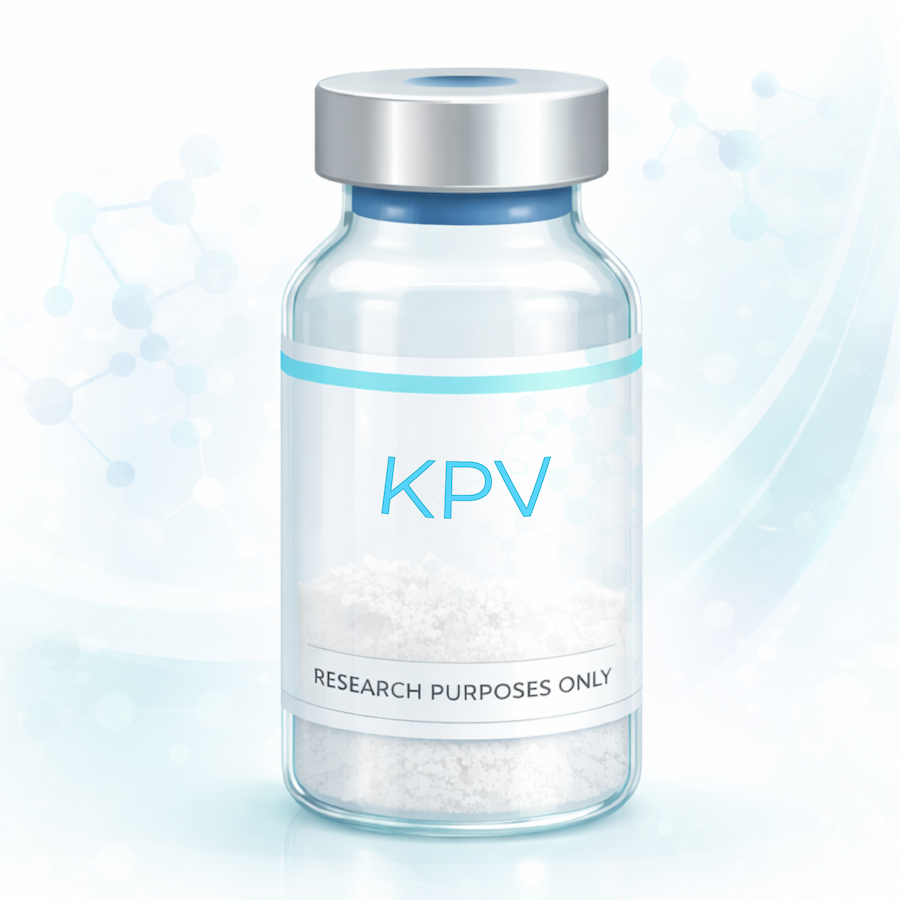
Description
Product Description:
KPV (Lysine-Proline-Valine)
Chemical Classification:
Alpha-MSH Tripeptide Fragment
Research Overview
KPV is a C-terminal tripeptide fragment derived from the -melanocyte-stimulating hormone (-MSH). In molecular biology research, KPV is a primary subject for investigating the non-pigmentary effects of melanocortins. Unlike the parent hormone, KPV does not exhibit affinity for the MC1R receptor (responsible for skin pigmentation), making it a specialized ligand for studying anti-inflammatory signaling and cellular homeostasis without pigmentary interference.
Common Research Applications
This tripeptide is frequently utilized in laboratory models to investigate the following experimental objectives:
- Inhibitory Cytokine Signaling: Studies focusing on the modulation of NF-B (nuclear factor kappa-light-chain-enhancer of activated B cells) and the subsequent suppression of pro-inflammatory cytokine expression.
- Intestinal Epithelial Homeostasis: Research regarding the transport mechanisms of PepT1 (Peptide Transporter 1) and the peptide’s influence on colonic inflammation models and mucosal barrier integrity.
- Dermatological Anti-Inflammatory Action: Investigations into the reduction of edema and the modulation of the inflammatory response in epidermal cell cultures and dermal research models.
- Antimicrobial Research: Exploration of the peptide’s potential synergistic effects when studied alongside antimicrobial agents, specifically focusing on its interaction with Staphylococcus aureus and Candida albicans in laboratory assays.
Laboratory Handling & Storage
- Appearance: Lyophilized white powder.
- Solubility: Highly water-soluble; easily reconstituted in bacteriostatic water or phosphate-buffered saline (PBS).
Stability: Highly stable due to its short-chain structure. Lyophilized powder should be stored at -20°C for long-term preservation. Once reconstituted, store at 2°C – 8°C.