
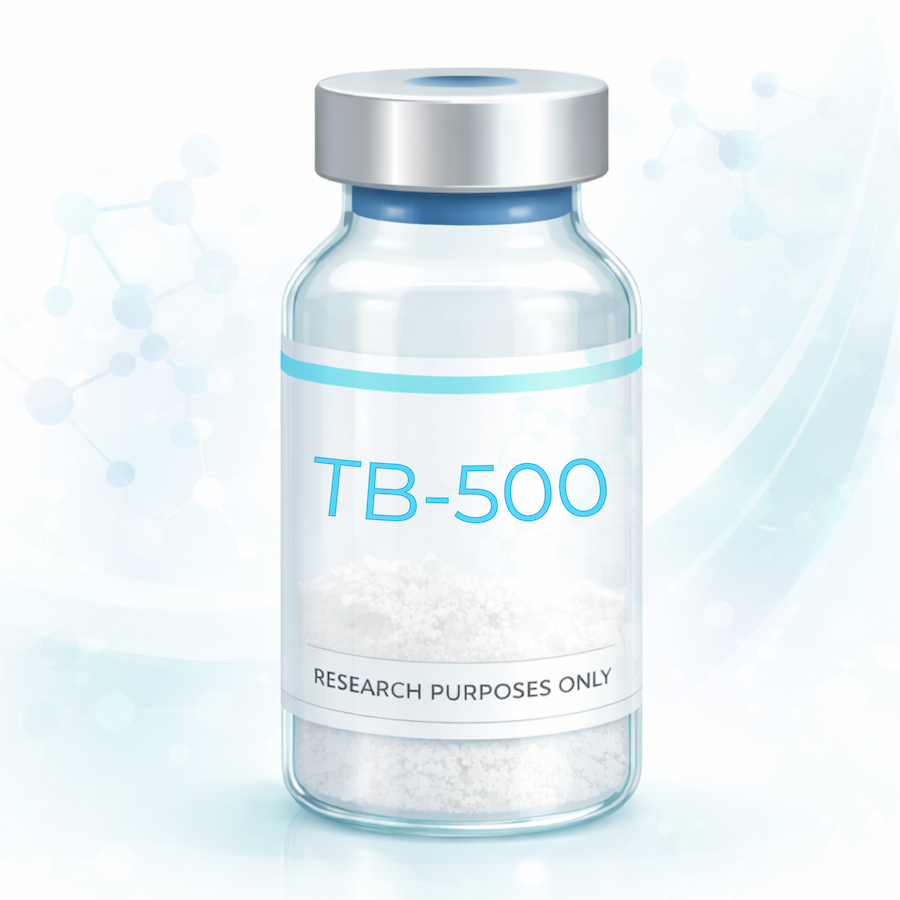
Description
TB-500 (Thymosin Beta-4 Fragment)
Chemical Classification: Synthetic Peptide Fragment of Thymosin 4
Research Overview
TB-500 is a synthetic version of the naturally occurring 43-amino acid peptide, Thymosin Beta-4. In molecular biology, it is specifically identified by its active 17-amino acid sequence (LKKTETQ), which is the primary functional domain responsible for actin-binding and cellular migration. TB-500 is a key subject in laboratory investigations regarding the upregulation of G-actin (globular actin) sequestration and its role in tissue remodeling and systemic repair pathways.
Common Research Applications
This synthetic fragment is frequently utilized in laboratory models to investigate the following experimental objectives:
- Actin Polymerization Dynamics: Studies focusing on the peptide’s role as a major G-actin sequestering molecule, influencing the rate of cell motility and the assembly of the cellular cytoskeleton.
- Angiogenic Growth Signaling: Research into the induction of endothelial cell differentiation and the migration of capillary-forming cells in various damaged tissue assays.
- Musculoskeletal Fiber Repair: Investigations into the recruitment of progenitor cells and the modulation of inflammatory markers in skeletal muscle and connective tissue models.
- Dermal and Corneal Recovery: Research observing the rate of re-epithelialization and the reduction of collagen deposition (scarring) in epidermal and ocular research subjects.
- Vascular Endothelial Migration: Exploration of the peptide’s ability to cross biological barriers and its systemic influence on distal repair sites through hematogenous transport simulation.
Laboratory Handling & Storage
- Appearance: Lyophilized white powder.
- Solubility: Soluble in bacteriostatic water, or sterile saline.
- Stability: Stable at room temperature for transit. For long-term preservation, the lyophilized powder must be stored at -20°C. Once reconstituted, the solution should be kept at 2°C – 8°C