
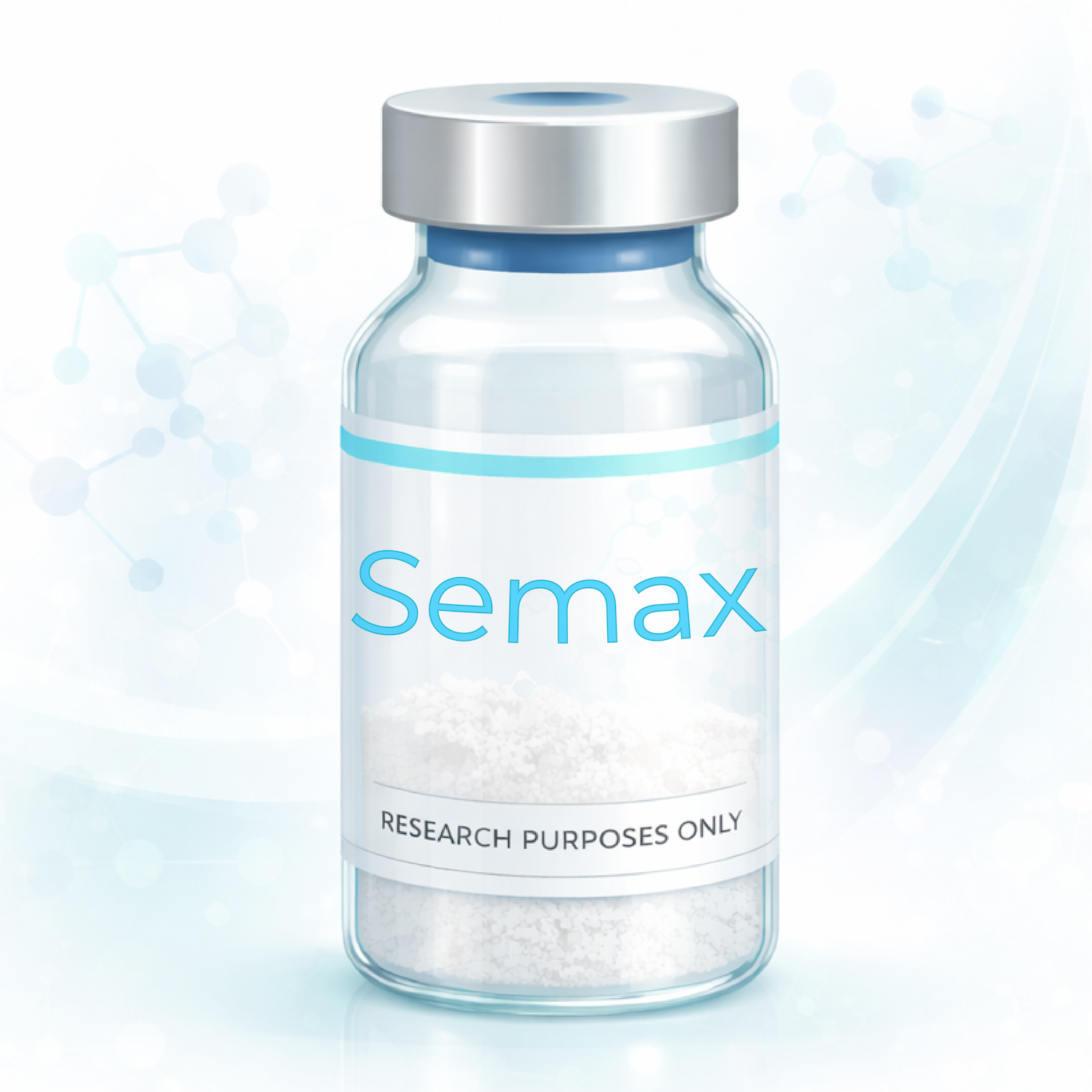
Description
Semax
Chemical Classification: Synthetic Neuropeptide / ACTH Analog
Research Overview
Semax is a synthetic heptapeptide analog of the fragment . In neurochemical research, it is classified as a nootropic and neuroprotective peptide. It was originally developed to investigate the modulation of the central nervous system without the systemic hormonal effects typically associated with adrenocorticotropic hormones. Semax is a primary subject in studies exploring neuroplasticity, mRNA expression of neurotrophins, and the cellular response to hypoxic environments.
Common Research Applications
This neuro-active heptapeptide is frequently utilized in laboratory models to investigate the following experimental objectives:
- Neurotrophic Factor Induction: Research focusing on the peptide’s ability to stimulate the expression of Brain-Derived Neurotrophic Factor (BDNF) and Nerve Growth Factor (NGF) in the hippocampus and basal forebrain.
- Ischemic & Hypoxic Shielding: Investigations into the neuroprotective mechanisms of Semax during simulated oxygen deprivation, specifically its influence on neuronal survival and the reduction of oxidative stress.
- Gene Expression Profiling: Studies regarding the peptide’s impact on the transcription of genes involved in the immune and vascular systems within brain tissue.
- Dopaminergic & Serotonergic Modulation: Research exploring the influence of Semax on the synthesis and metabolism of dopamine and serotonin, particularly in models of cognitive deficit or psychostimulant interaction.
- Enkephalin Stability: Exploration of the peptide’s role in inhibiting enkephalin-degrading enzymes, similar to its analog Selank, to observe the prolongation of endogenous regulatory signals.
Laboratory Handling & Storage
- Appearance: Lyophilized white powder.
- Solubility: Highly water-soluble; easily reconstituted in sterile bacteriostatic water or saline.
- Stability: Highly stable in lyophilized form. Powder should be stored at -20°C for long-term preservation.