
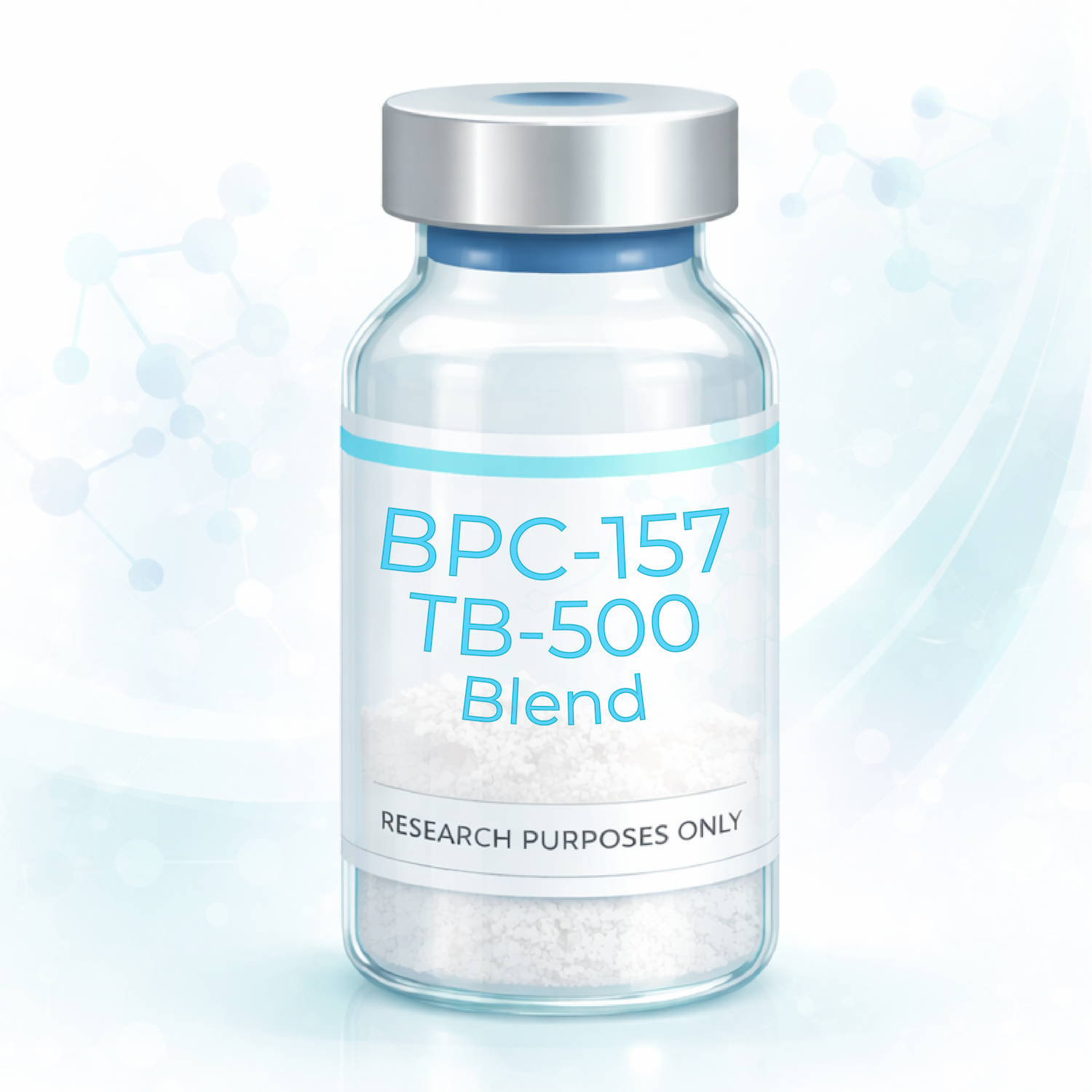
Description
BPC-157 & TB-500 Blend
Chemical Classification: Combined Regenerative Peptide Solution
Components: Pentadecapeptide BPC-157 / Thymosin Beta-4 Fragment (TB-500)
Research Overview
This specialized blend contains a 1:1 ratio (or specified concentration) of BPC-157 and TB-500. In molecular biology, this combination is a primary subject for studying multi-pathway tissue repair. While BPC-157 is researched for its stable gastric cytoprotective properties and its role in upregulating Growth Hormone receptors, TB-500 is investigated for its ability to sequester G-actin and promote rapid cellular motility. Researchers utilize this blend to observe the potential additive effects on angiogenesis and the accelerated remodeling of the extracellular matrix (ECM).
Common Research Applications
This dual-peptide formulation is frequently utilized in laboratory models to investigate the following experimental objectives:
- Synergistic Angiogenesis: Research focusing on the combined induction of Vascular Endothelial Growth Factor (VEGF) and the formation of new capillary networks in ischemic tissue models.
- Fibroblast & Myoblast Proliferation: Investigations into the rate of cell spreading and migration in musculoskeletal injury simulations, specifically focusing on the F-actin expression influenced by TB-500.
- Ligament and Tendon Healing Dynamics: Studies regarding the “collagen-organizing” effects of BPC-157 paired with the systemic migratory recruitment signals of TB-500.
- Systemic vs. Localized Repair: Exploration of how the highly stable BPC-157 interacts with the systemically mobile TB-500 to influence distal repair sites in non-human subjects.
- Inflammatory Cytokine Modulation: Research observing the reduction of pro-inflammatory markers (such as TNF-) when both ligands are present in a cellular environment.
Laboratory Handling & Storage
- Appearance: Lyophilized white powder (Combined).
- Solubility: Easily reconstituted in sterile bacteriostatic water or saline.
- Stability: Both peptides are stable at room temperature for transit. For long-term preservation, the lyophilized powder must be stored at -20°C.