
Description
Sermorelin (GRH 1-29)
Chemical Classification: Growth Hormone-Releasing Hormone (GHRH) Analog
Research Overview
Sermorelin is a synthetic 29-amino acid peptide representing the functional truncated fragment of the naturally occurring human Growth Hormone-Releasing Hormone (GHRH). In biochemical research, it is classified as a growth hormone secretagogue. It acts as a direct agonist of the GHRH receptors in the anterior pituitary gland. Unlike exogenous Growth Hormone (HGH), Sermorelin is a primary subject in studies exploring the preservation of the negative feedback loop (somatotropic axis), as it stimulates the endogenous release of GH in a pulsatile manner rather than providing a static elevation.
Common Research Applications
This somatotropic analog is frequently utilized in laboratory models to investigate the following experimental objectives:
- Pituitary Functionality Assays: Research focusing on the “reserve capacity” of the anterior pituitary to secrete endogenous growth hormone in response to hormonal provocation.
- IGF-1 Pathway Modulation: Investigations into the secondary elevation of Insulin-like Growth Factor 1 (IGF-1) and its subsequent influence on cellular repair and protein synthesis.
- Circadian GH Pulsatility: Studies regarding the restoration of natural, nocturnal GH secretion patterns which often diminish in aged biological models.
- Proteostasis and Muscle Metabolism: Research observing the peptide’s role in nitrogen retention and the maintenance of lean muscle mass in catabolic research environments.
- Slow-Wave Sleep Interaction: Exploration of the correlation between GHRH receptor activation and the quality of non-REM (delta-wave) sleep cycles.
Laboratory Handling & Storage
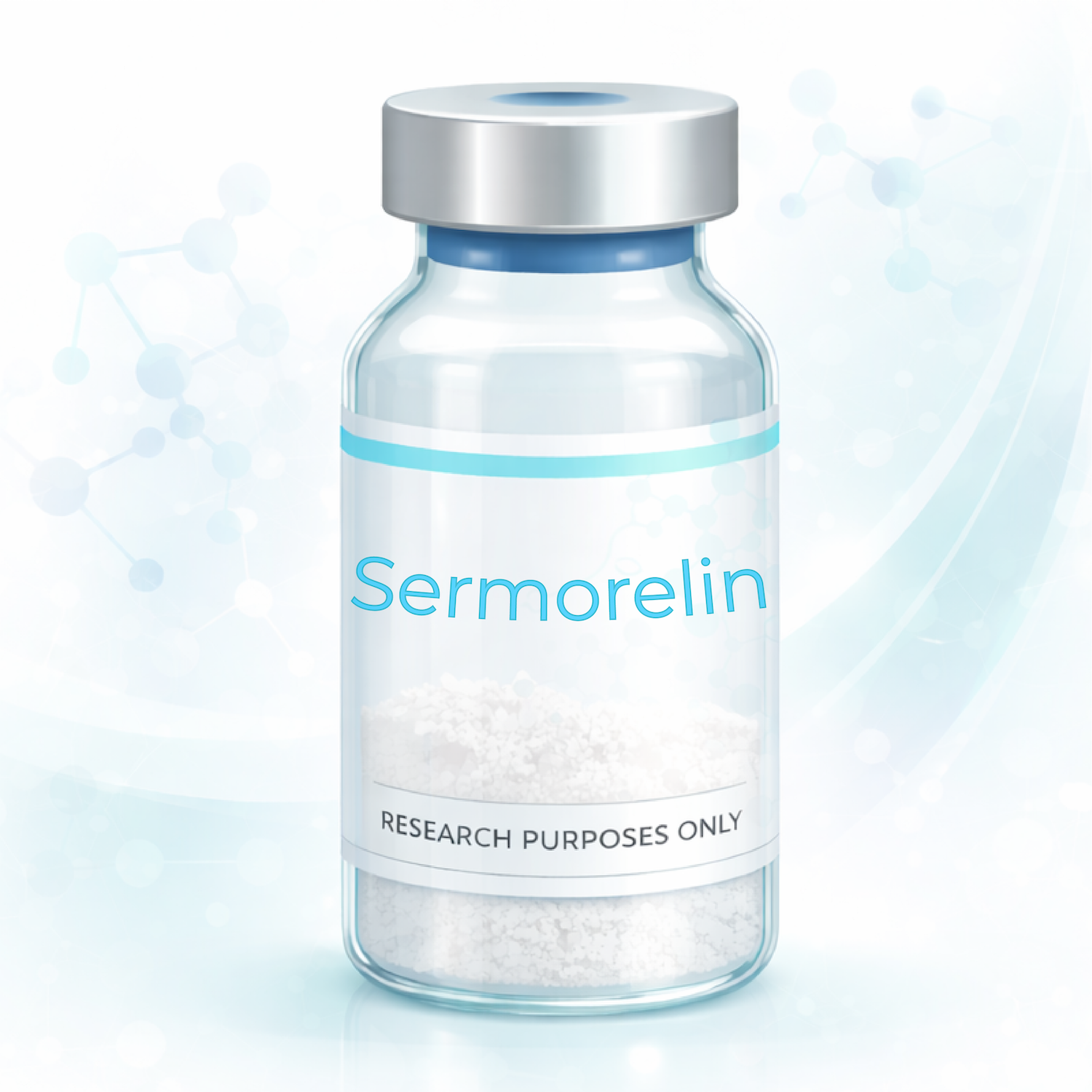
- Appearance: Lyophilized white powder.
- Solubility: Highly soluble in sterile bacteriostatic water; reconstitution should be performed with gentle swirling to avoid mechanical degradation of the peptide chain.
- Stability: Highly sensitive to temperature once in solution. Lyophilized powder must be stored at -20°C for long-term preservation.