
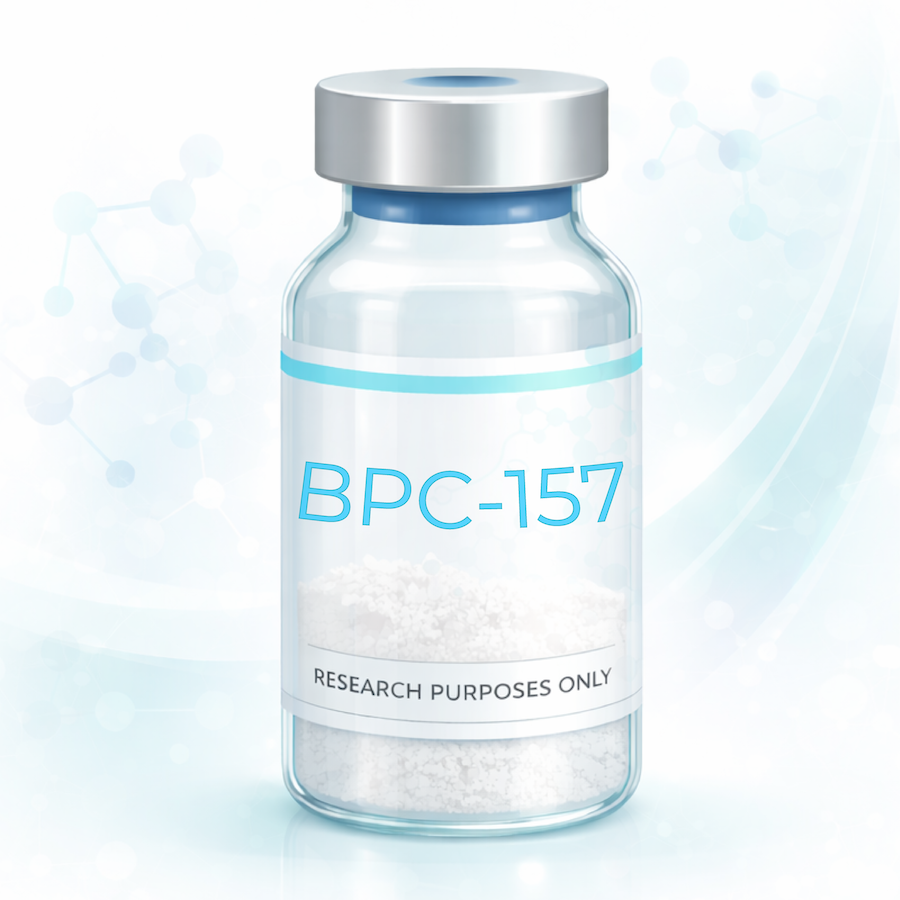
Description
Product Description:
BPC-157 (Body Protection Compound)
Chemical Classification: Pentadecapeptide (15 Amino Acids) Molecular Formula: Molecular Weight: g/mol
Research Overview
BPC-157 is a partial sequence of human gastric juice protein consisting of 15 amino acids. In biochemical research, it is classified as a “Stable Gastric Pentadecapeptide” due to its unique resistance to hydrolysis and enzymatic degradation in various pH environments. It is a primary subject in studies regarding angiogenesis and cytoprotection.
Common Research Applications
This peptide is frequently utilized in laboratory models to investigate the following experimental objectives:
- Angiogenic Signaling: Research into the upregulation of Vascular Endothelial Growth Factor (VEGF) and the formation of new capillary structures in damaged tissue models.
- Tendon and Ligament Fibroblasts: Investigations into the growth-promoting effects of BPC-157 on tendon fibroblasts and its influence on the F-actin expression involved in cell spreading.
- Nitric Oxide (NO) Synthesis: Studies exploring the peptide’s interaction with the nitric oxide pathway to modulate vascular response and mucosal integrity.
- Gastrointestinal Cytoprotection: Research focusing on the “organo-protective” properties of the peptide, specifically its ability to maintain the mucosal barrier in the presence of noxious agents.
- Neurological Repair Pathways: Emerging studies investigating the potential interaction between BPC-157 and the dopaminergic and serotonergic systems in the central nervous system.
Laboratory Handling & Storage
- Appearance: Lyophilized white powder.
- Solubility: Highly soluble in bacteriostatic water or sterile saline.
Stability: Lyophilized powder is stable at room temperature for 3-4 weeks. For long-term preservation, store at -20°C. Once reconstituted, store at 2°C – 8°C